Learn Italian language while sipping wine
Have you ever noticed that wine has its own language? At Podere Cerbaia, we believe that a glass of wine is more than just a drink—it’s a conversation. Whether you are sitting around the table or relaxing under one of our olive trees, drinking wine with friends is one of the most delicious ways to practice your Italian.
In our “L’italiano nel bicchiere” (Italian in the glass) sessions, we don’t just drink; we describe, we feel, and we learn. Let’s start our journey through the senses, beginning with the very first thing you do when a glass is poured.

Italian language to talk about wine
In our “L’italiano nel bicchiere” (Italian in the glass) sessions, we describe, we feel, and we learn. Let’s start our journey through the senses, beginning with the very first thing you do when a glass is poured.
DEGUSTARE: the Italian word to mean ‘meaningful and intentional tasting’
Degustare un vino – Significato ed etimologia – Ricerca – Treccani
Step 1: La Vista (The Sight)
Before you take a sip, you must look. In Italian, we don’t just say a wine is “red” or “white.” We use “aggettivi” (adjectives) that describe its soul and its age.
- Rosso Rubino (Ruby Red): This is the color of a young, vibrant wine, full of life.
- Rosso Granato (Garnet Red): As a wine ages, it takes on a deeper, brick-like hue. It tells a story of time spent in the cellar.
- Giallo Paglierino (Straw Yellow): For our whites, we often use this term to describe the bright, sunny color of dried straw.
Language Tip: When you hold your glass up to the light, you can say: “Che bel colore intenso!” (What a beautiful, intense color!). It’s the perfect way to start a conversation with your fellow tasters.
Step 2: L’Olfatto (The Smell)
In Italian, we don’t just “smell” wine; we annusiamo (sniff) it to discover its profumo (perfume) or sentore (scent). This is the most evocative part of the lesson, where we try to find the memories hidden in the glass.
- Sentore di Frutti Rossi (Notes of Red Fruits): Common in our Tuscan reds, you might smell ciliegia (cherry) or mora (blackberry).
- Aroma Speziato (Spicy Aroma): If the wine has rested in wood, you might detect pepe nero (black pepper) or vaniglia (vanilla).
- Floreale (Floral): For our whites or younger reds, think of violetta (violet) or fiori di campo (wildflowers).
Language Tip: When you take a deep breath and find a scent you recognize, you can say: “Sento un profumo inebriante” (I smell a very intense aroma). It shows you are truly connecting with the wine’s character.
Step 3: Il Gusto (The Taste)
Finally, the moment we’ve all been waiting for: il sorso (the sip). This is where the structure of the wine meets the structure of the Italian language. We look for balance and harmony on the tongue.
- Sapido (Savory/Saline): This describes a wine with a pleasant mineral touch, often reflecting the very soil of its origin.
- Persistente (Linger/Persistent): Does the flavor stay with you after you swallow? If it does, the wine is molto persistente.
- Equilibrato (Balanced): The “Holy Grail” of winemaking. It means the acidity, tannins, and alcohol are dancing together in perfect harmony.
Language Tip: After your first sip, a simple but elegant way to express your appreciation is: “È un vino di corpo” (It’s a full-bodied wine) or simply, “Che equilibrio!” (What balance!).
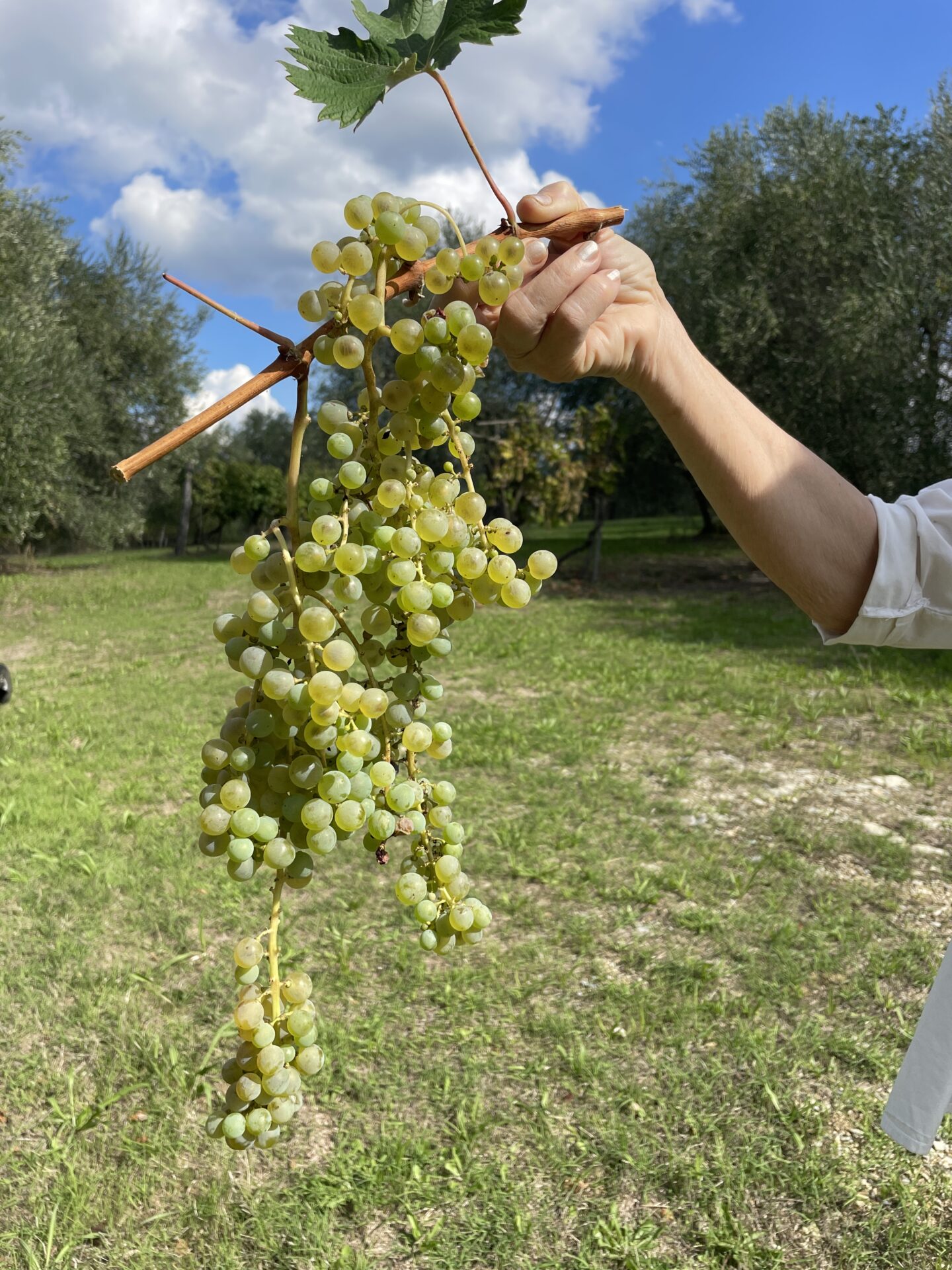
Why Experience Beats the Textbook: The Power of Context
In our lessons we often discuss a fundamental truth of linguistics: learning is not just a mental process; it is a physical one. Trying to memorize a list of Italian adjectives from a textbook is like trying to describe a sunset without ever looking at the sky. You might remember the word sapido (savory) for an hour, but you will remember it for a lifetime if you learn it while feeling the Tuscan breeze and tasting the mineral notes of a wine grown in that very soil.
When you connect a word to a sensation—the weight of the glass, the aroma of the cellar, the shared laughter around a table—your brain creates a “sensory anchor.” This is why we believe that a stay at Podere Cerbaia is worth months of silent study. Here, Italian isn’t a subject to be mastered; it is a life to be lived. As we say in Italy: “L’esperienza è la madre della sapienza” (Experience is the mother of wisdom). Food experience, Italian Cooking classes | Podere Cerbaia
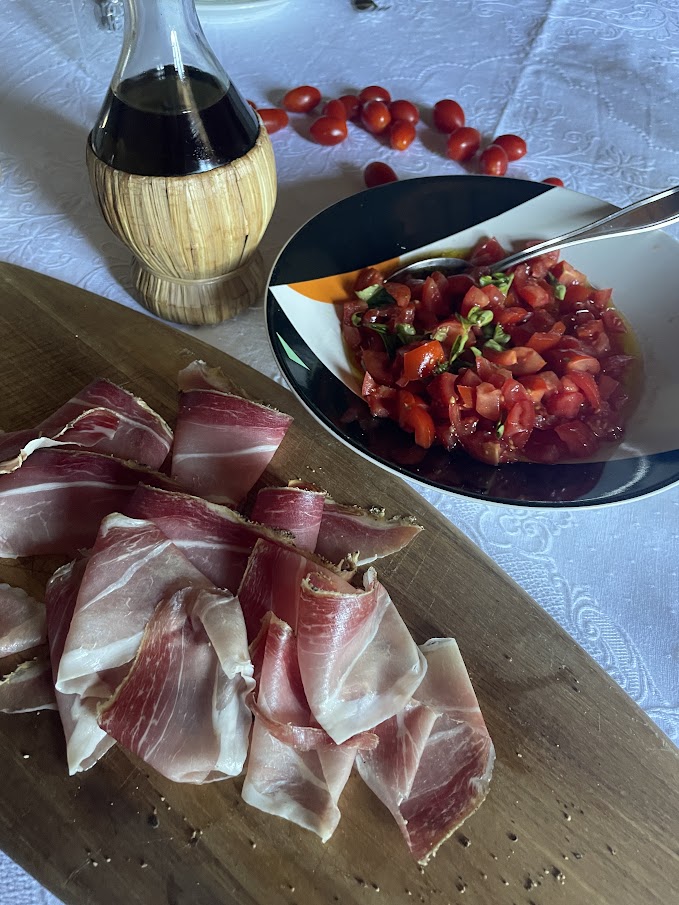
a classic for Aperitivo and the best to learn the language !
Come and stay with us at Podere Cerbaia for your own unbeatable experience in Tuscany. Your Italian Home in Chianti Away from Home | Podere Cerbaia