Language links to tradition and explains the present
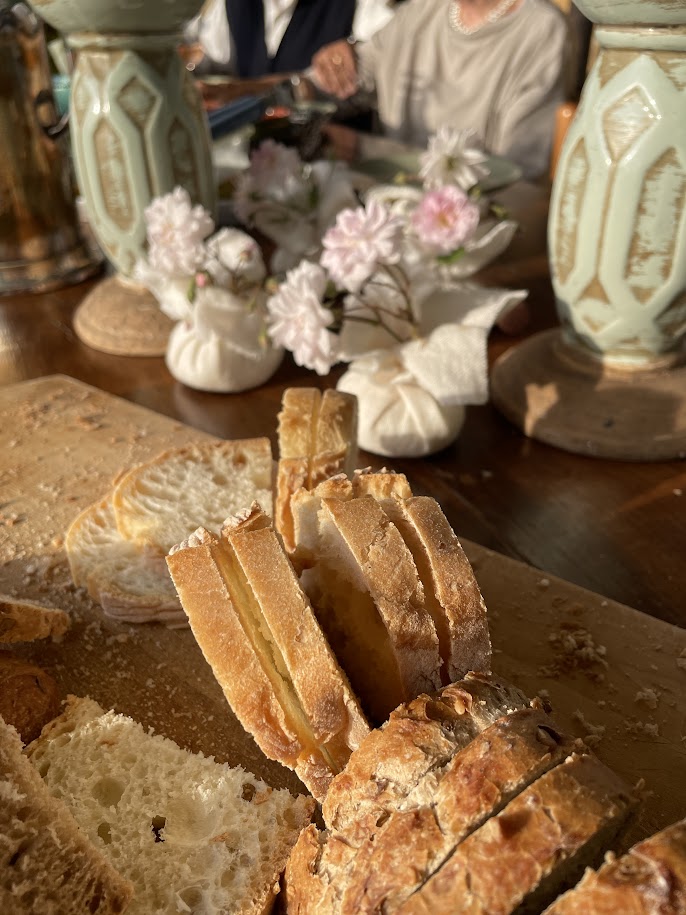
If you have ever sat at a Tuscan table, perhaps during a golden afternoon here at Podere Cerbaia, you might have noticed something unusual from your very first bite of bread: it has absolutely no salt.
For many travelers, this comes as a surprise. In a country world-famous for its rich cuisine, why is the local bread so intentionally tasteless on its own? The answer lies in a fascinating blend of medieval warfare, linguistic quirks, and culinary genius.
A Linguistic Lesson: The Meaning of Sciocco
To understand Tuscan bread, you must first learn a wonderful Italian word: sciocco.
In modern Italian, sciocco usually means “silly” or “foolish.” However, its original meaning is deeply rooted in the kitchen. The word derives from the Latin ex-succus, which literally translates to “without juice” or “lacking flavor.”
When Tuscans call their bread pane sciocco, they aren’t insulting its intelligence—they are describing its defining characteristic: it is completely unsalted. In Tuscany, language and food are so intertwined that a person who lacks personality or wit is described exactly like a loaf of bread: sciocco!
War, Taxes, and Medieval Rivalries
The history of this saltless tradition takes us back to the Middle Ages, a time of fierce rivalries between Tuscan city-states.
According to historical legend, during one of the many conflicts between Florence and Pisa in the 12th century, the Pisans blocked the salt trade routes coming from the coast, hoping to force Florence to surrender by cutting off their supply. Instead of giving in, the stubborn Florentines simply started baking their bread without salt.
However, historians point to a more practical and documented reason: high fiscal taxes. In medieval times, salt was a luxury and governments heavily taxed it through high fees known as gabelle. Even the great poet Dante Alighieri famously referenced this regional difference in the Divine Comedy (Paradiso, Canto XVII) while predicting his bitter exile from Florence: “Tu proverai sì come sa di sale lo pane altrui…” (“You shall learn how salt is the taste of another’s bread…”).
The Heritage of Pane Toscano DOP
What began as historical necessity and tax evasion has evolved into a strictly protected culinary art. Today, true Tuscan bread is recognized as Pane Toscano DOP (Protected Designation of Origin).
To carry this prestigious title, the bread must be made following rigorous traditional rules: it requires only certified local wheat flour (containing the precious wheat germ), water, and a natural sourdough starter (lievito madre). No additives, no preservatives, and, of course, strictly zero salt. The result is a crunchy crust, a soft, airy interior, and a characteristically rustic aroma.
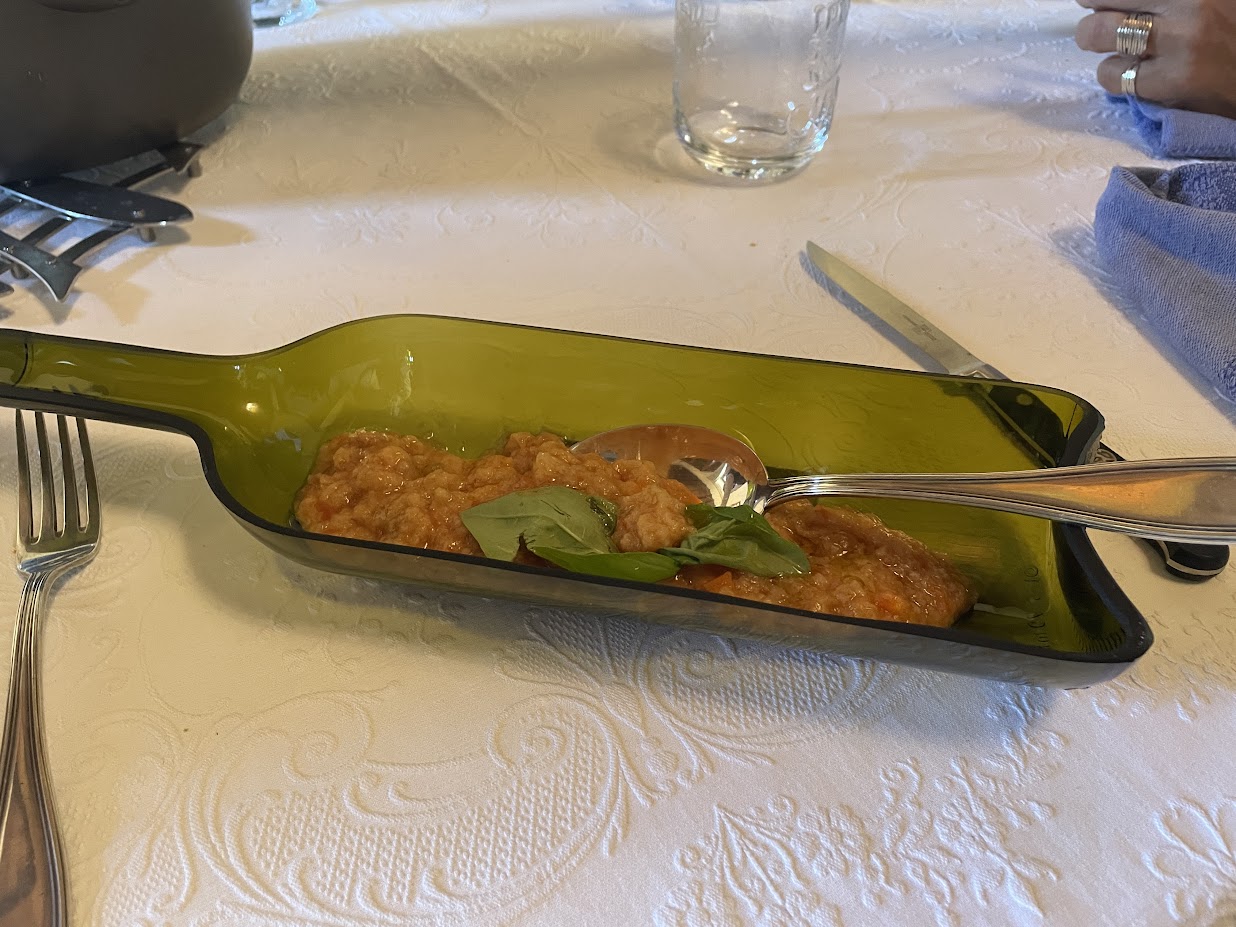
Pappa al Pomodoro
Because Pane Toscano is made without salt, it possesses another incredible quality: it hardens slowly without molding, making it perfect to be stored for days. In the poor peasant tradition (cucina povera), stale bread was never thrown away: food cannot be wasted! So, with the fantasy of women in the kitchen, forced to do ‘more with less’, old bread became the star of legendary dishes.
The most famous of these is undoubtedly Pappa al Pomodoro. This thick, comforting tomato and bread ‘soup’ is a masterpiece! Stale pane sciocco is broken in pieces and simmered with garlic, ripe tomatoes, carrots, celery, fresh basil, and rich extra virgin olive oil until it breaks down into a velvety, porridge-like consistency (pappa). Because the bread is unsalted, it absorbs the rich juices of the tomatoes and the herbal notes of the olive oil like a sponge, turning simple leftovers into a culinary masterpiece. It is often translated with ‘soup’ but it is not a ‘zuppa’! La Pappa is something different: you have to taste it!
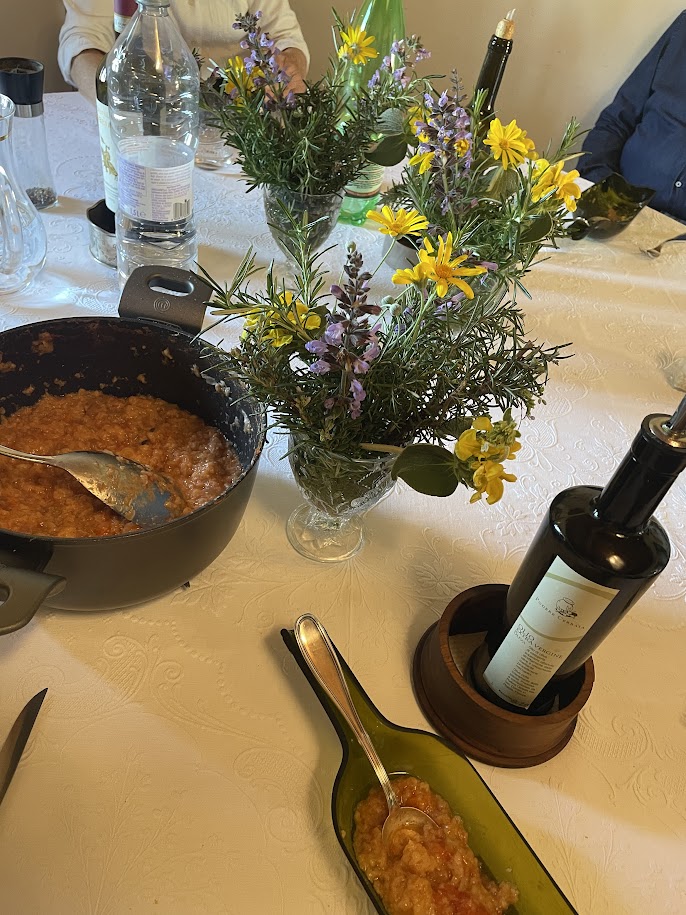
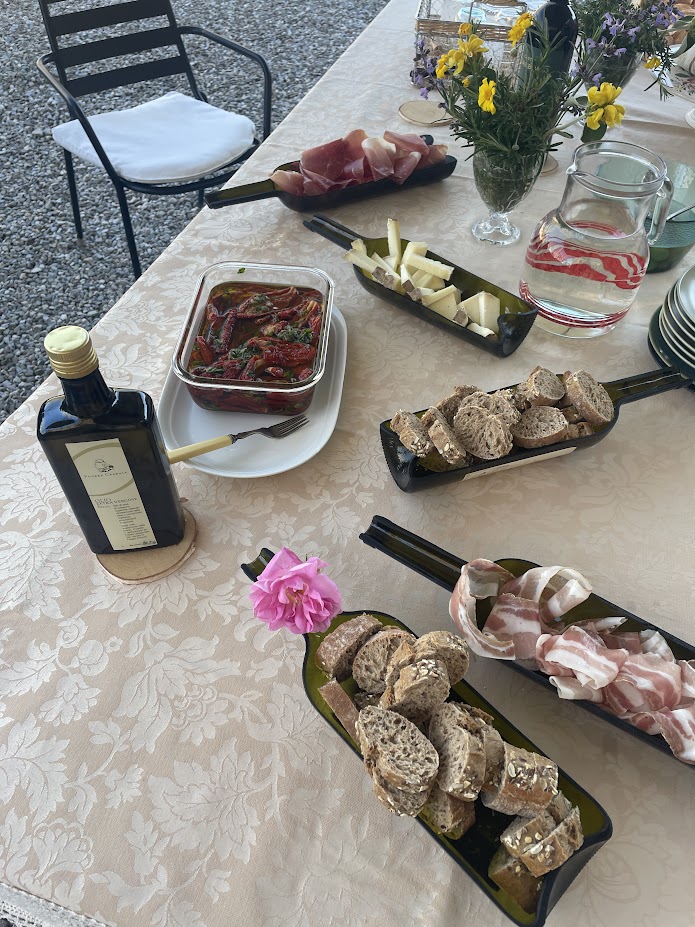
Come and visit us at Podere Cerbaia to also learn traditional Tuscan cooking. Take a piece of pane sciocco, pour a drizzle of our own olive oil on top, and savor tradition!