Learn to Speak and Eat Italian like a local
At Podere Cerbaia, we believe that fully experiencing our land means not only tasting its food, but also speaking its language—or at least knowing the colorful expressions that turn a simple meal into an authentic Tuscan moment so that you really feel part of the conversation.
If you are joining us around our table, here is a mini “survival guide” to the most popular local idioms and phrases tied to the table. Master these, and you’ll instantly feel like a local!
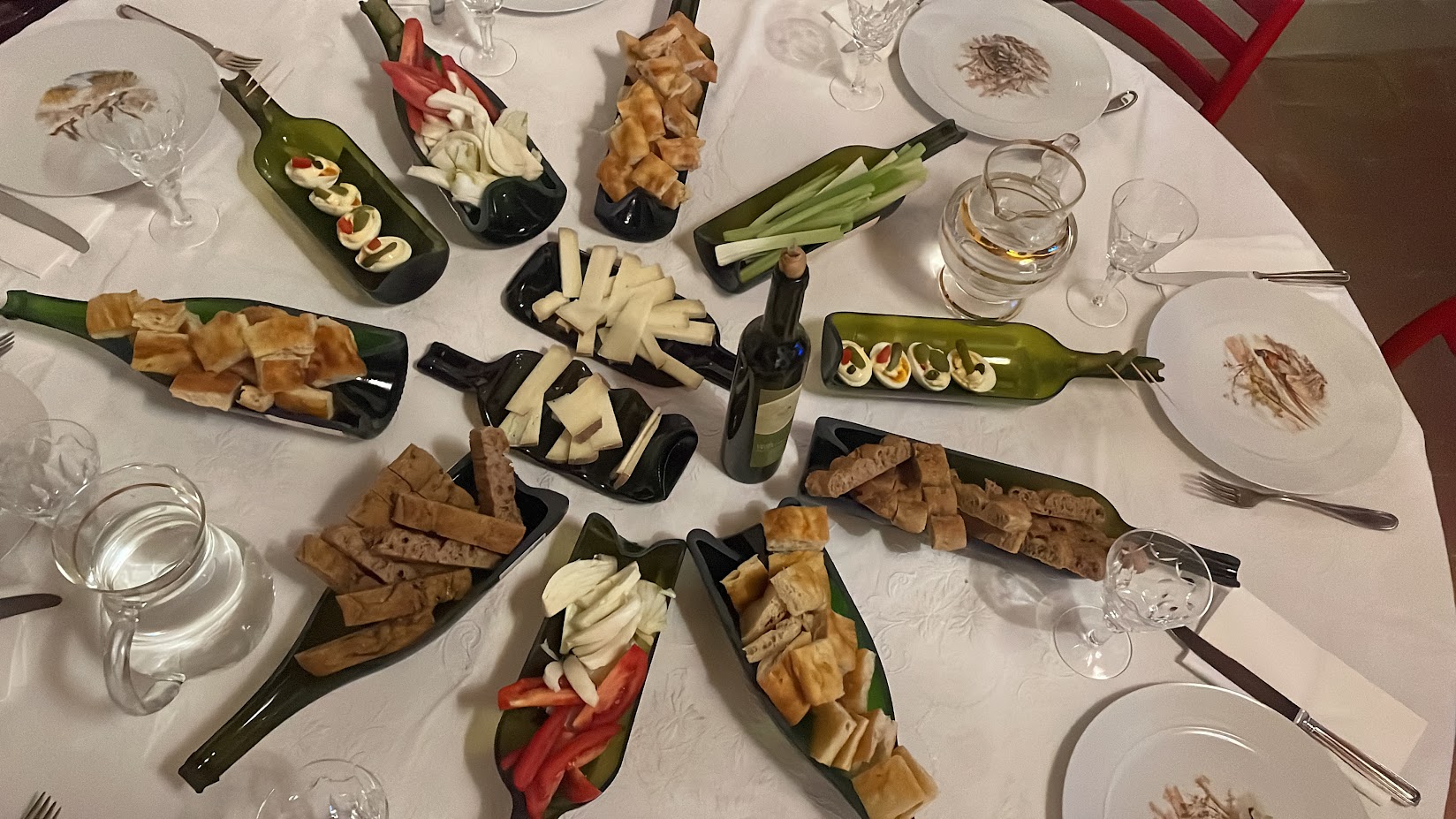
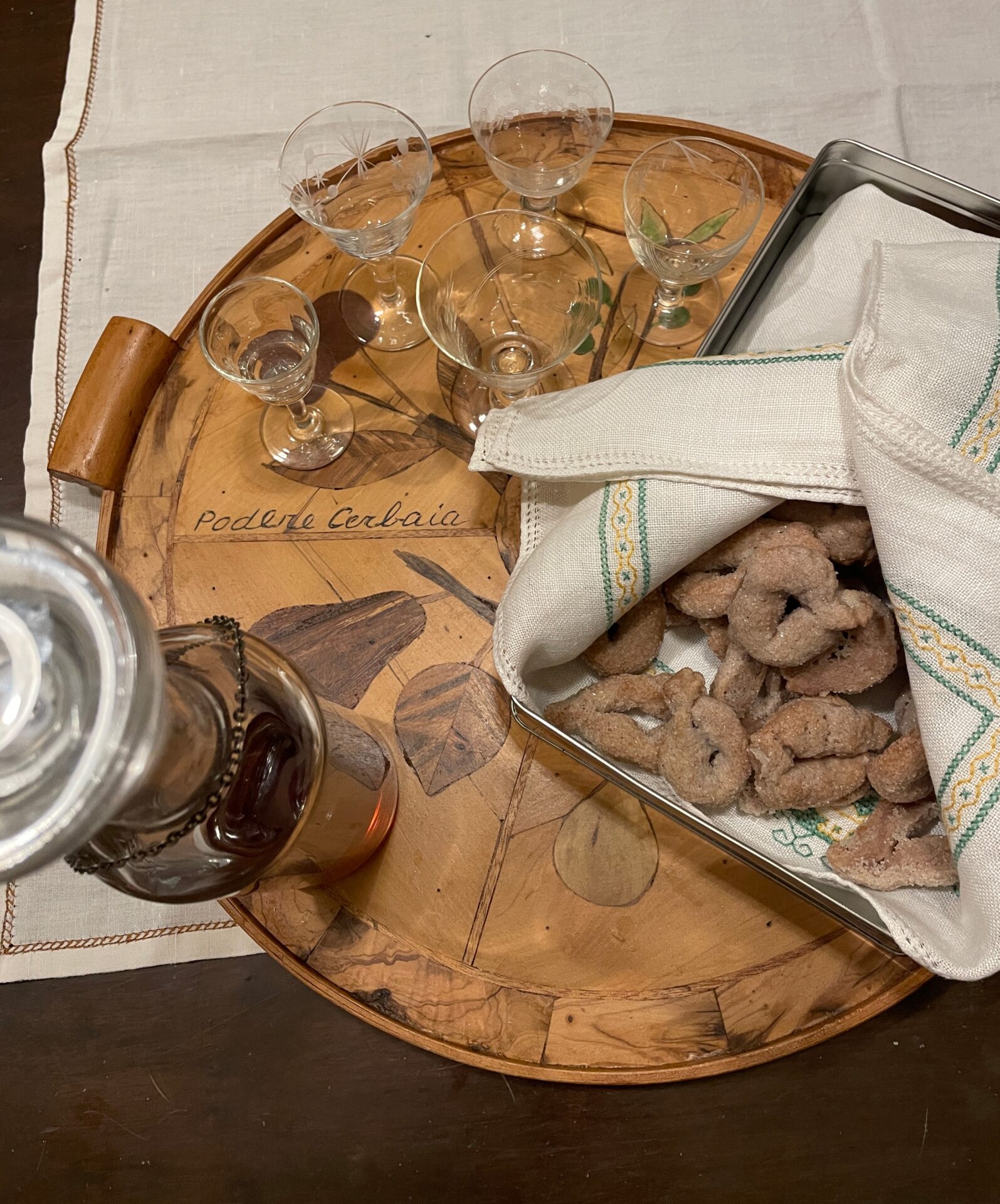

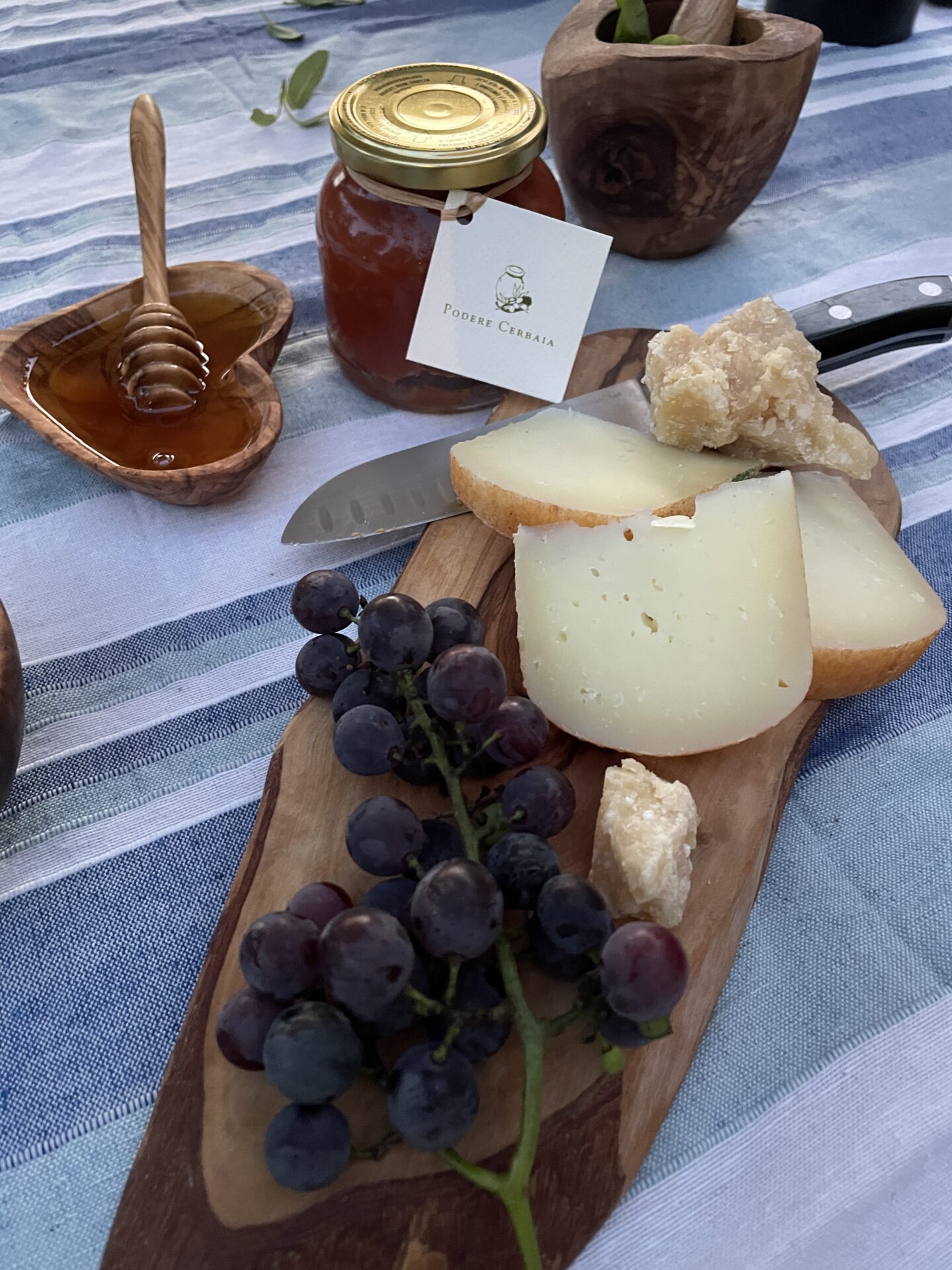



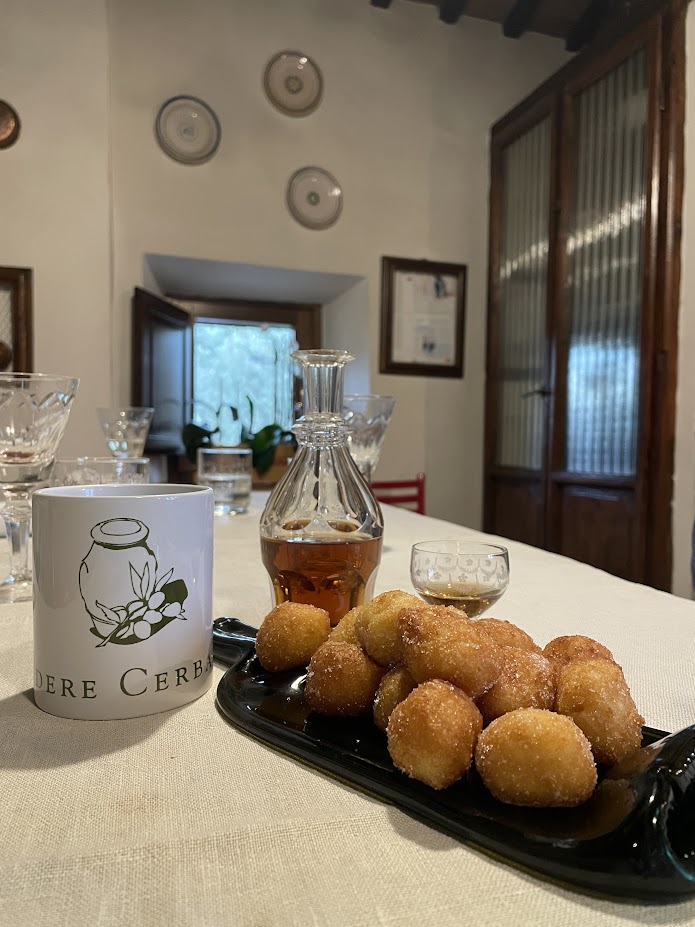
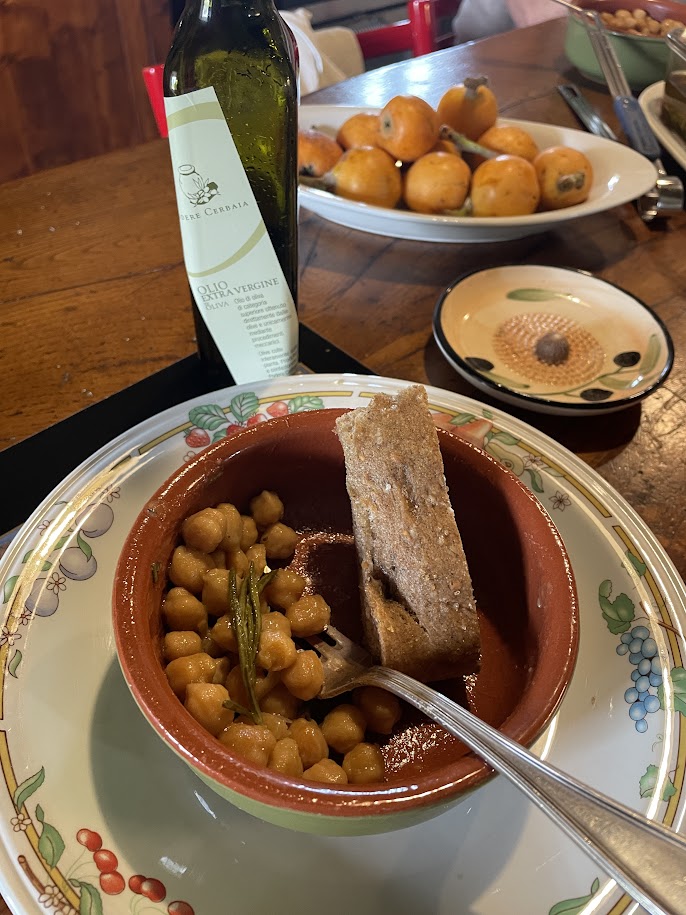
Ever heard any of the following Expressions?
1. Fare la scarpetta (To “make the little shoe”)
- Pronunciation: fah-reh lah skahr-peht-tah
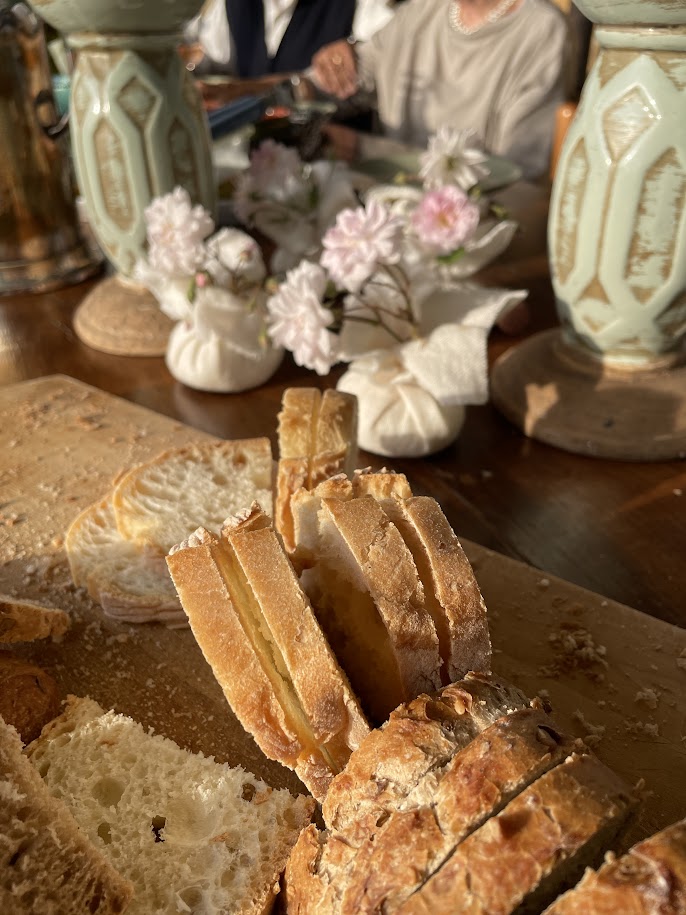
- What it means: Cleaning your plate of every last drop of delicious sauce using a piece of bread (pane sciocco, of course!) Why is Tuscan Bread “Sciocco”? A Journey Through History, Language, and Flavor – Podere Cerbaia in the heart of Chianti
- The story behind it: No one is entirely sure why it’s called a “little shoe”—some say the piece of bread looks like a shoe dragging through the sauce, while others say it implies “stepping into” the plate. Whatever the origin, in Tuscany, leaving good sauce behind is practically a crime. Don’t be shy: fare la scarpetta is the ultimate compliment to the cook!
2. Mangiare a quattro palmenti (To eat with four millstones)
- Pronunciation: mahn-jah-reh ah kwat-troh pahl-mehn-tee
- What it means: To devour food enthusiastically, eagerly, and in large quantities.
- The story behind it: A palmento was the heavy millstone used in old mills to grind grain or press grapes. A mill running at full capacity used all four stones at once. When you sit down after a long day of exploring and completely clear your plate of pasta, you are officially mangiando a quattro palmenti full speed and full appetite!
3. Solo un goccio (Just a drop) … of WINE!
- Pronunciation: soh-loh oon goht-choh
- What it means: “Just a tiny splash of wine, please.”
- The story behind it: Literally translating to “just a drop,” this is the polite phrase every guest uses when offered another glass of local wine. However, in true Tuscan host culture, saying “solo un goccio” is usually met with a generous refill anyway! It represents the gentle, playful tug-of-war between Tuscan modesty and unconditional hospitality.
4. A tavola non si invecchia (At the table, one does not age)
- Pronunciation: ah tah-voh-lah nohn see een-vehk-kyah
- What it means: Time spent enjoying a meal with loved ones doesn’t count against your lifespan!
- Why it matters to us: lunches and dinners in Tuscany are never rushed. They stretch across hours of shared laughter, good wine, and storytelling under the starry sky in summer or around the fireplace in winter. This proverb is the perfect excuse to linger just a little longer over a glass of Vin Santo. A tavola non si invecchia: significato e tradizione – Convivium Firenze
5. Gola (Greed / Gluttony) e GOLOSO!
- Pronunciation: goh-lah
- What it means: Literally “throat,” but used to describe an irresistible craving for sweet or savory treats.
- How to use it: When you know you are full, but you simply cannot resist a second serving of cantucci or fresh fig crostata, just smile and say: “È per gola!” (It’s purely out of gluttony!).
Experience the Art of Tuscan Conviviality at Podere Cerbaia
Eating together is a big part of Italian culture
Food in Tuscany is never just survival; it’s a language of hospitality, culture, and ancient traditions. At our table you can take your time, practice your new words (and expressions!), and remember: as long as you’re sitting at our table, time stands still.
Buon appetito!
Learn Italian in Chianti, Tuscany, Italy | Podere Cerbaia
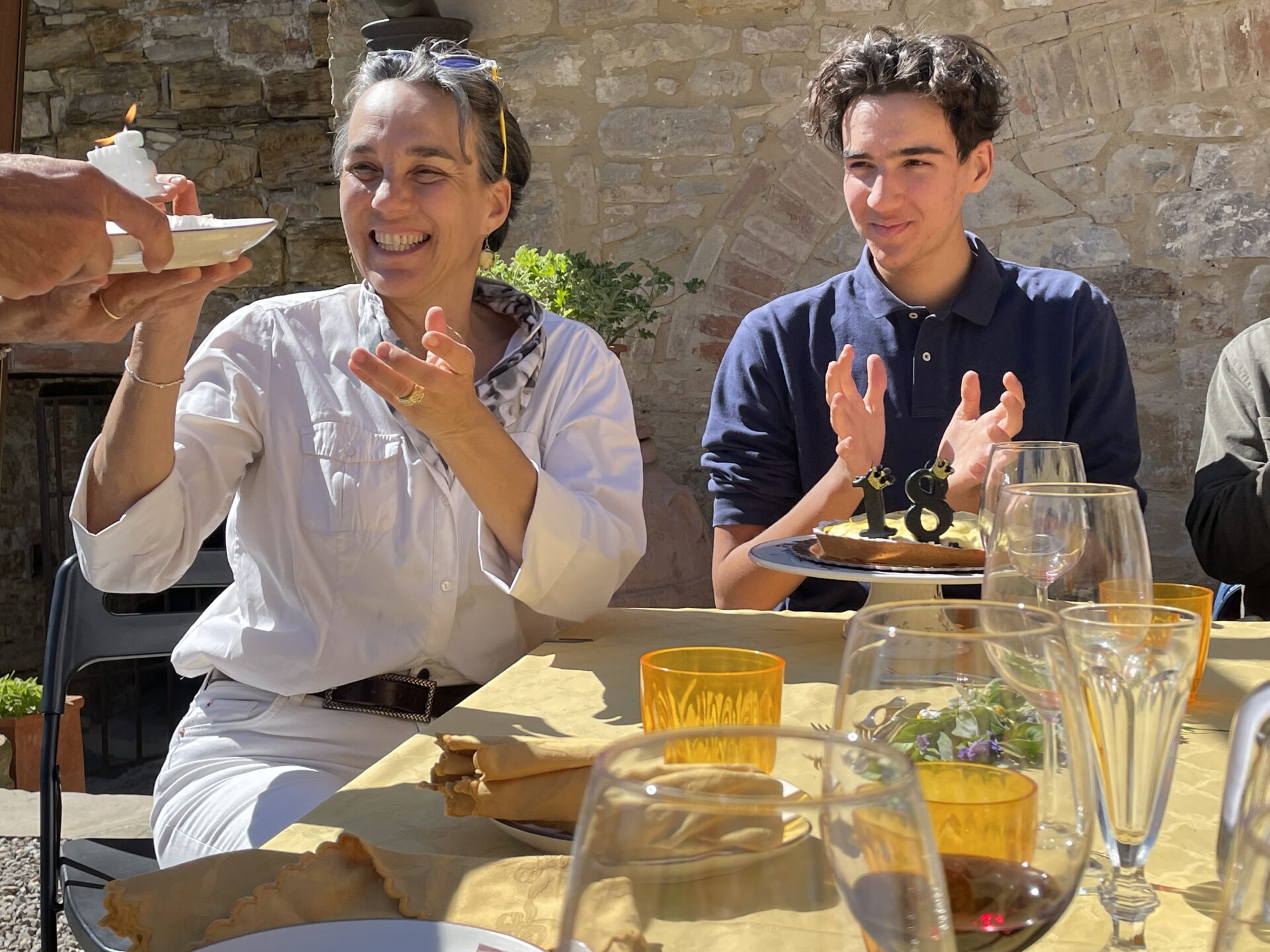
Birthday cake and a colorful table: TANTI AUGURI!